SynSense’s neuromorphic intelligence technology draws inspiration from the brain’s neural structure and cognitive principles to power a new generation of computational systems with human-like perception, reasoning, and learning.
Neuromorphic Intelligence
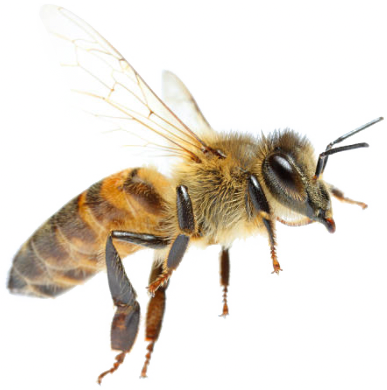
Nature already demonstrates the power of efficient intelligence: bees perform complex navigation, nesting, and foraging with just a million neurons, consuming only 0.1 milliwatts. The human brain extends this paradigm at a far greater scale, operating through massively parallel neural networks with sparse activation and delivering remarkable efficiency and adaptability. These principles form the foundation for a new era of low-power, scalable computing.
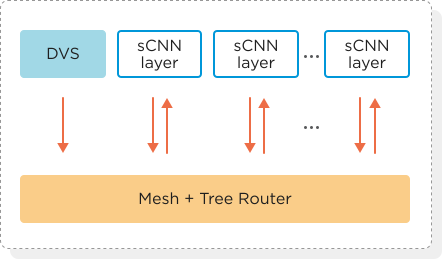
At the core of this technology are our neuromorphic chips, which use neurons and synapses as fundamental building blocks to emulate biological intelligence. By enabling real-time perception, learning, memory, and decision-making at ultra-low power, our chips overcome the limitations of traditional von Neumann architectures and unlock transformative possibilities across industries.
Traditional Computing Bottlenecks
Continuous Sampling → Data Explosion
- All channels always-on
- Data volume grows exponentially with channel count
- Storage, transmission, and power consumption all rise
Data Transformation → Energy Inefficiency
- Traditional computing follows: acquisition → buffer → memory → processor → write-back
- Massive data movement drives up energy consumption
Batch Processing → Latency Accumulation
- Acquisition, transmission, and computation are sequential
- Latency stacks up across stages
Features of Neuromorphic Chips
New Computing Mechanism
Event-driven computing based on sparse communication
New Architecture
Novel synchronized computing with distributed kernel and memory
Cutting-Edge Algorithm
Spatial-temporal computing powered by spiking neural networks
Neuromorphic Computing:
Far More Efficient Than Traditional Paradigms
Neuromorphic Intelligence
Advantages

Event-driven
Power consumption reduced by 100-1000 times

Asynchronous
Real-time increased by 10-100 times

High temporal sequence dependency
Dynamic information processing

Cost Optimization
5–10× Improvement in System Cost
Continuous Innovation with cloud-edge fusion solution
Sensor Node I
Low computational costs on the edge
AI computation nodes
Edge Sensing and Computing

2021–2022

CHIPS – SPECK
XYLO
Sensor Node II
High computational costs on the edge

2022–2023
CHIPS - DYNAP-CNN
Sensor Fusion
Multi-sensory fusion computing

2023

CHIPS - DVS-SLAM
Edge Cloud
Analog computation, neuromorphic near-memory computing
Perceptive Fusion

2023–2024
CHIPS - MULTI-CORE DYNAP
DYNAP-M
XYLO-M
2021–2022
Sensor Node I
Low computational costs on the edge
AI computation nodes
CHIPS – SPECK,
XYLO,
2022–2023
Sensor Node II
High computational costs on the edge
CHIPS - DYNAP-CNN,
2023
Sensor Fusion
Multi-sensory fusion computing
CHIPS - DVS-SLAM,
2023–2024
Edge Cloud
Analog computation, neuromorphic near-memory computing
CHIPS - MULTI-CORE DYNAP,
DYNAP-M,
XYLO-M,